Cold Floors, Warm Desks: A Thermal Audit for the Garden Studio
Photo: Jonathan Clemens (Jclemens (talk)), CC BY-SA 3.0, via Wikimedia Commons
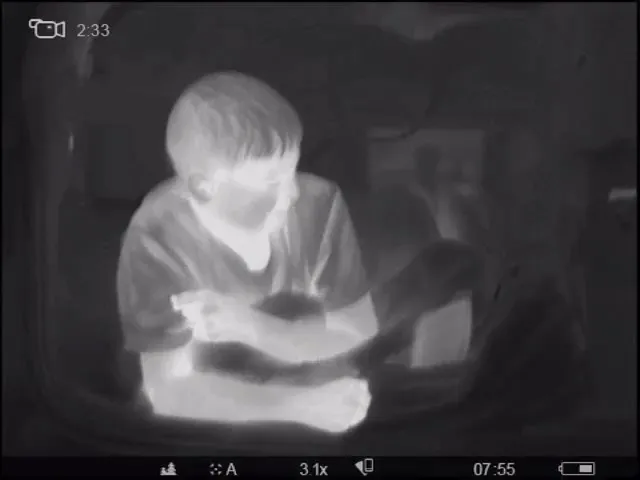
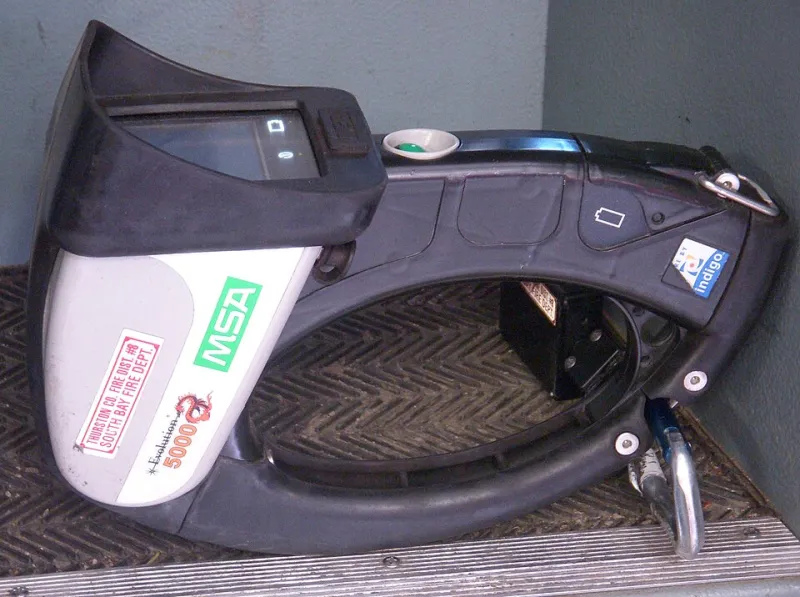
By the second week of November, a garden office stops behaving like a spare room at the end of the lawn and starts behaving like a small, detached building with its own weather. The desk may still be warm; the floor beneath it rarely is. Before a heater, a smart plug or a subscription to another app, a thermal camera can answer a more useful question: where is the warmth actually leaving?
A small building that fails in its own way
Garden studios, sheds and converted outbuildings are not miniature houses. They typically have one or two exposed elevations, a thin envelope, limited thermal mass and a floor close to the ground. Many were built as summer rooms and later asked to perform in January. The result is a predictable set of weak points — and a predictable temptation to solve them with heat rather than fabric.
A thermal survey does not need to be elaborate. It needs to be fair, repeatable and recorded.
Setting up a fair reading
Thermal cameras measure surface temperature, not insulation. A reading is only as good as the conditions in which it is taken. For an outbuilding, the most useful window is a cold, dry morning before the sun reaches the walls. Direct sunlight on a façade will mask or mimic heat loss for hours. Rain cools surfaces unevenly and can leave water films that alter emissivity.
Aim for a temperature difference of at least 10°C between inside and out. If the studio has been unheated overnight, warm it for half an hour before the survey and note the time. Then walk the building from the outside in, keeping the camera square to each surface where possible. Low-e glass, aluminium frames and polished metal will read misleadingly cold or warm; treat those areas as prompts for a second look, not as final evidence.
The outside walk: where the envelope speaks
Start at ground level and work upwards. The wall-to-floor junction is often the first place a garden building admits cold. On a timber-framed studio, a continuous cold band at the base may indicate missing sole-plate insulation or a cold bridge through the frame. On a converted brick outbuilding, it may be rising damp or a solid wall with no cavity. The image will not tell you which; the pattern will tell you where to look.
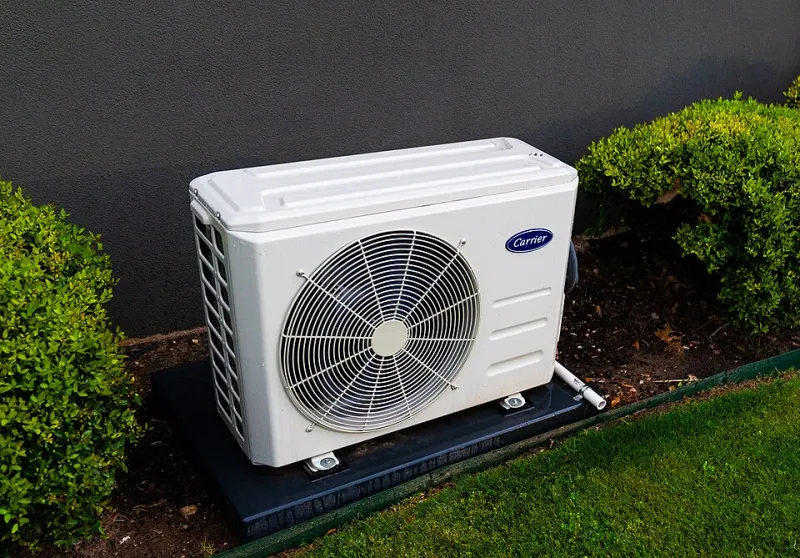
Then examine the corners, roof edges and any service penetrations. A cold plume around a cable duct or an air-conditioning pipe is an air path, not necessarily an insulation failure. Window reveals are another common weak point: the frame may be thermally broken, but the reveal around it often is not. If the studio has single glazing, expect the glass to read close to outdoor temperature; that is normal physics, not a camera fault.
Record each image with a timestamp, the internal and external air temperatures, and a note on wind. A photograph of a pretty colour palette is not evidence; a sequence with conditions is.
The floor is usually the finding
Inside, the floor deserves more attention than the walls. Many garden offices sit on a concrete slab, a timber deck or a series of joists with little beneath them. A thermal image taken across the floor after the room has been heated will often show stripes or a cold perimeter. Stripes aligned with joists suggest thermal bridging through the frame; a cold perimeter suggests the slab edge is exposed or the insulation has been omitted at the margins.
This matters because cold floors do more than chill feet. They create a low-level radiant asymmetry that makes an occupied desk feel colder than the air temperature suggests, and they provide a surface on which moisture can condense. A heater that warms the air will not fix either problem. It will simply raise the running cost of an uncomfortable room.
Condensation before the heater
November is also the month when a garden studio starts to smell faintly of damp. The dew point is the temperature at which air must be cooled before water vapour condenses; any surface below that point will attract moisture. Single-glazed windows, cold floor edges and uninsulated metal frames are usual suspects.
Before adding heat, check ventilation. A small room with a kettle, a person and a closed door accumulates moisture quickly. Background ventilation — a trickle vent, a humidity-triggered extractor or a deliberate air path — is often more effective than a dehumidifier running against a sealed box.
Sequence the interventions
The temptation is to buy a smart heater and let an app manage the symptoms. A thermal audit suggests a different order. First, address air paths: draught-proofing around doors, frames and service holes. Second, address the cold bridges that the camera has identified, particularly at the floor perimeter. Third, consider insulation upgrades where the pattern is persistent. Only then size a heat source for the remaining load.
A smart heater with a room sensor will keep the air at a set point. It cannot compensate for a floor that is 6°C colder than the desk. Used after envelope improvements, it becomes a control device rather than a substitute for fabric.
What to keep
Keep the images, the notes and a simple plan. A thermal survey taken in November is a baseline; a second survey in February, under similar conditions, shows whether the interventions worked. That is the difference between a gadget purchase and a diagnosis.
The garden office can be a comfortable place to work through the winter. It is more likely to become one if the first purchase is a camera, not a heater.