When the Outdoor Coil Blooms White: A Thermal Camera Guide to Heat Pump Defrost Cycles
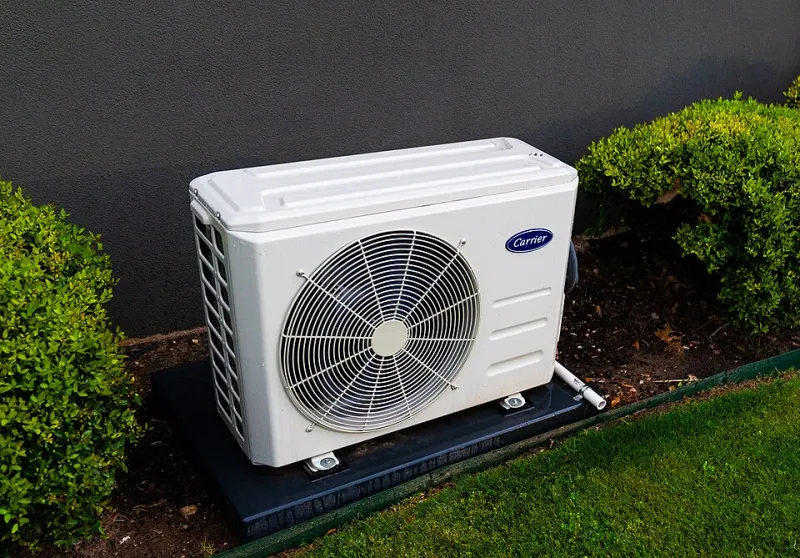
Photo: Tony Webster, CC BY 4.0, via Wikimedia Commons
On a cold, damp morning, a heat pump’s outdoor unit can look alarmingly white. Frost gathers across the coil, the fan may sound different, and the indoor temperature can dip for a few minutes. None of this is necessarily a sign of failure. A heat pump is designed to frost, and it is designed to clear that frost. The useful question is not whether frost appears, but whether the defrost cycle is behaving as it should.
A thermal camera is well suited to that question. It does not diagnose refrigerant charge or control logic on its own, but it turns a vague concern into an observable sequence: frost building, frost clearing, coil warming, coil returning to normal operation. For UK households on a cold-morning routine, a short camera-led check can provide clearer evidence than a description of the indoor temperature alone.
Why frost appears, and why it is not the same as failure
A heat pump extracts low-grade heat from outdoor air. The outdoor coil often runs below the ambient dew point and, in many winter conditions, below the frost point. Moisture from the air condenses on the coil and freezes. A light, even layer of frost is therefore a normal consequence of operation in cold, humid weather.
The problem begins when frost becomes thick enough to insulate the coil. Heat transfer falls, the system recognises the loss of performance and initiates a defrost cycle. Many air-source heat pumps reverse the refrigerant cycle briefly so that the outdoor coil warms and the frost melts. Others use hot gas or another method. During defrost, the unit may stop delivering heat to the rooms, or it may call on an auxiliary heater. That pause can allow the indoor temperature to fall slightly.
For a householder, the important distinction is between a short, controlled defrost and a system that is repeatedly fighting ice. A thermal camera helps because it shows where warmth is being applied and whether the coil is clearing evenly.
A ten-minute thermal check of the outdoor unit
Safety comes first. Do not remove panels, touch pipework or interfere with the unit while it is running. Work from a safe distance and follow the manufacturer’s guidance. A thermal camera can be used from outside the casing without dismantling anything.
Before starting, record the outdoor temperature, an estimate of humidity from a weather app, and the time since the heating last started. Then take a short sequence of images rather than a single photograph:
- the coil before a defrost begins, with frost visible;
- the coil during defrost, when warm sections should appear;
- the coil immediately after defrost, as it returns to normal operation;
- the indoor room temperature before and after the cycle.
Keep the camera angle consistent and note the distance. Frost and water have high emissivity compared with bare metal, but wet surfaces and reflections can still mislead. Use the camera’s relative temperature patterns rather than treating absolute readings as precise. A thermal image is evidence of distribution, not a calibrated thermometer.
What normal behaviour looks like
In normal operation, frost tends to form evenly across the coil. Defrost may occur every half hour to an hour and a half in cold, humid conditions, though the interval varies by model, load and weather. The defrost itself should be relatively brief, often a few minutes. Water should drain away, and the coil should return to an even cold pattern afterwards. Steam or vapour during defrost is common and not automatically a fault.
On the thermal camera, a healthy defrost often appears as a broad warm band spreading across the coil. The warmth may not be perfectly uniform, but it should be present across the affected area. Once defrost ends, the coil returns to a colder, more even appearance. Indoors, the room may cool a little during the pause, then recover as heating resumes.
Red flags worth recording
Some patterns merit closer attention. Thick ice that persists at the bottom of the coil, or ice that remains after a defrost, suggests that drainage or defrost completion may be poor. Frost confined to one section of the coil can indicate a refrigerant distribution issue, a sensor problem or restricted airflow. Defrost cycles that occur very frequently, last unusually long or fail to restore heating should be logged rather than dismissed.
A thermal camera can also reveal a coil that warms in one area while remaining cold elsewhere during defrost. That patchiness is more useful to an installer than a general complaint that the unit frosts up. Other warning signs include unusual noise, error codes, a fan that does not run, water pooling and refreezing around the base, and an indoor temperature that falls during defrost but does not recover afterwards.
Building a useful record before calling an installer
An installer needs a sequence, not a snapshot. Note the date and time, outdoor temperature and humidity, when defrost started and ended, and the indoor temperature before and after. Keep visual photographs alongside thermal images, and label each image with the stage of the cycle. A short video can be more informative than several stills because it shows how quickly the coil warms and clears.
If the system has energy monitoring or app-based performance data, include that too. The aim is to show whether the defrost is occasional and complete, or frequent and incomplete. That distinction helps an installer decide whether to check sensors, refrigerant charge, airflow, drainage or control settings.
A heat pump that frosts on a cold morning is doing expected work. A heat pump that stays frosted, defrosts repeatedly without clearing, or cannot maintain indoor comfort is telling a different story. A thermal camera will not replace a service visit, but it can make the first conversation more precise.