Foil, Gap, Wall: What a Thermal Camera Reveals About Radiator Reflectors
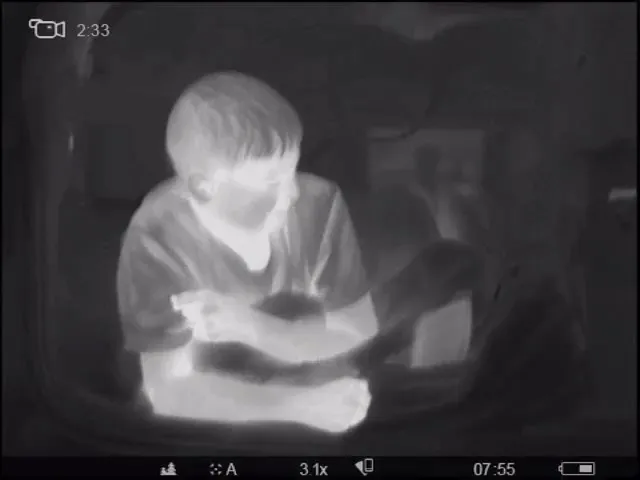
Photo: West Midlands Ringing Group, CC BY-SA 4.0, via Wikimedia Commons
Radiator reflector panels are one of the simplest energy-efficiency products a UK homeowner can fit: a thin foil-backed sheet placed behind a radiator, usually on an external wall. The claim is intuitive. Radiators emit radiant heat in all directions, and a reflective surface should send some of that heat back into the room rather than letting it warm the wall. But does the idea survive a thermal camera test?
The answer is nuanced. A thermal camera can show that a reflector changes the temperature pattern on the wall behind a radiator. It cannot, on its own, prove a meaningful reduction in energy use. For UK homes, the useful question is not whether foil reflects radiant heat — it does — but whether the wall, radiator position and air gap allow that reflection to matter.
The claim and the physics
A radiator does not heat a room by radiation alone. It transfers heat through a combination of radiation, convection and, to a lesser degree, conduction. The radiant component travels in straight lines and warms surfaces it strikes, including the wall behind the radiator. A low-emissivity foil surface facing the radiator reflects a proportion of that radiant energy back towards the room.
The critical detail is the air gap. If foil is pressed against the wall, it may reduce the wall's exposure to radiant heat, but it can also create a path for conduction and trap moisture if the wall is cold. Most reflector products are designed to sit slightly away from the wall, leaving an air gap behind the radiator. That gap allows the foil to act as a radiant barrier rather than a contact layer.
On an internal wall, the exercise is largely pointless. Heat passing into a neighbouring room is not necessarily lost from the building. On an external wall, especially an uninsulated solid wall, the case is stronger. On a well-insulated cavity wall or a wall with external insulation, the potential saving is usually small because the wall is already resisting heat loss effectively.
Setting up a fair thermal test
A before-and-after thermal image is easy to produce and easy to misread. To make the comparison defensible, keep conditions as stable as possible. Use the same boiler flow temperature, the same thermostat setpoint and the same weather window. Close doors, avoid direct sunlight on the wall, and allow the heating to run for at least two to three hours before each survey.
Mount the thermal camera on a tripod and record the same field of view each time. Measure the wall surface around the radiator perimeter, not the shiny foil itself. Reflective surfaces have low and variable emissivity, so a camera can report a misleading temperature when pointed directly at foil. If you need to compare the foil surface, place a strip of matte tape on it and allow the tape to settle.
Record the room air temperature separately. A reflector that lowers the wall temperature behind a radiator but leaves the room feeling the same has not delivered a comfort benefit. If possible, compare gas or electricity use over comparable weeks before and after fitting, adjusted for weather. That fuel data is the evidence a thermal image cannot supply.
What the images can and cannot show
In a typical solid-wall room, a before-and-after pair may show the wall behind the radiator cooling by a modest amount — often around 0.5°C to 1.5°C — once a reflector is fitted with a proper air gap. The pattern is usually most visible in the band immediately behind the radiator and less obvious at the edges.
That result is evidence of reduced radiant heating of the wall. It is not proof of a proportional reduction in the boiler's output. The wall may still be warmed by room air, and the radiator's convective output is unaffected. A thermal camera also cannot see heat flux directly; it sees surface temperature. The image is a diagnostic clue, not a meter reading.
There is a second trap: reflections. Foil can reflect the camera's own field of view or nearby cold surfaces, producing apparent cold spots that have nothing to do with wall heat loss. Always interpret the wall around the reflector, not the reflector alone.
Which UK wall types are worth the effort?
The strongest case is an uninsulated solid brick or stone external wall, particularly in older terraces and cottages where the radiator sits directly on the external wall. Here, the wall can act as a cold sink, and a reflector may reduce the radiant component reaching it.
For a 1930s semi with a cavity wall that has been filled, the benefit is likely to be marginal. For a modern home with external wall insulation, the wall is already protected; the reflector is unlikely to justify the cost or the fitting time. On internal walls, skip it. In rented homes, check the tenancy agreement before fixing anything to the wall, and avoid products that could trap moisture or interfere with the radiator brackets.
A practical checklist before buying
- Confirm the radiator is on an external wall. If it is not, the reflector has little purpose.
- Identify the wall construction: solid, insulated cavity, or externally insulated.
- Check that the product allows a clear air gap and does not seal the wall.
- Look for signs of damp or cold bridging before adding a reflective layer.
- Fit one radiator first and compare thermal images plus fuel use over comparable weather.
- Measure the wall surface, not the foil, and keep the camera angle consistent.
- Treat manufacturer savings claims as upper estimates, not guarantees.
- Spend first on draught-proofing, loft insulation and heating controls if those are unresolved.
The Thermis verdict
Radiator reflectors survive a thermal camera test in a limited sense: they can visibly reduce the radiant warming of an external wall. They do not survive as a universal energy-saving device. In 2026, with UK households still attentive to running costs, the sensible approach is to test the specific wall, measure the specific radiator and compare fuel data over time. Foil is cheap, but evidence is cheaper still when it prevents a false economy.