Front Door Bias: Why a Hallway Sensor Never Tells the Whole Story
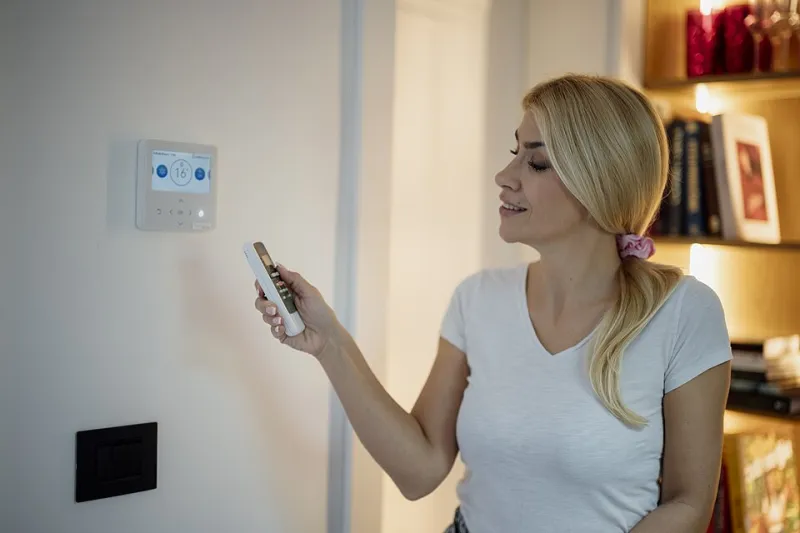
Photo: Shixart1985, CC BY 2.0, via Wikimedia Commons
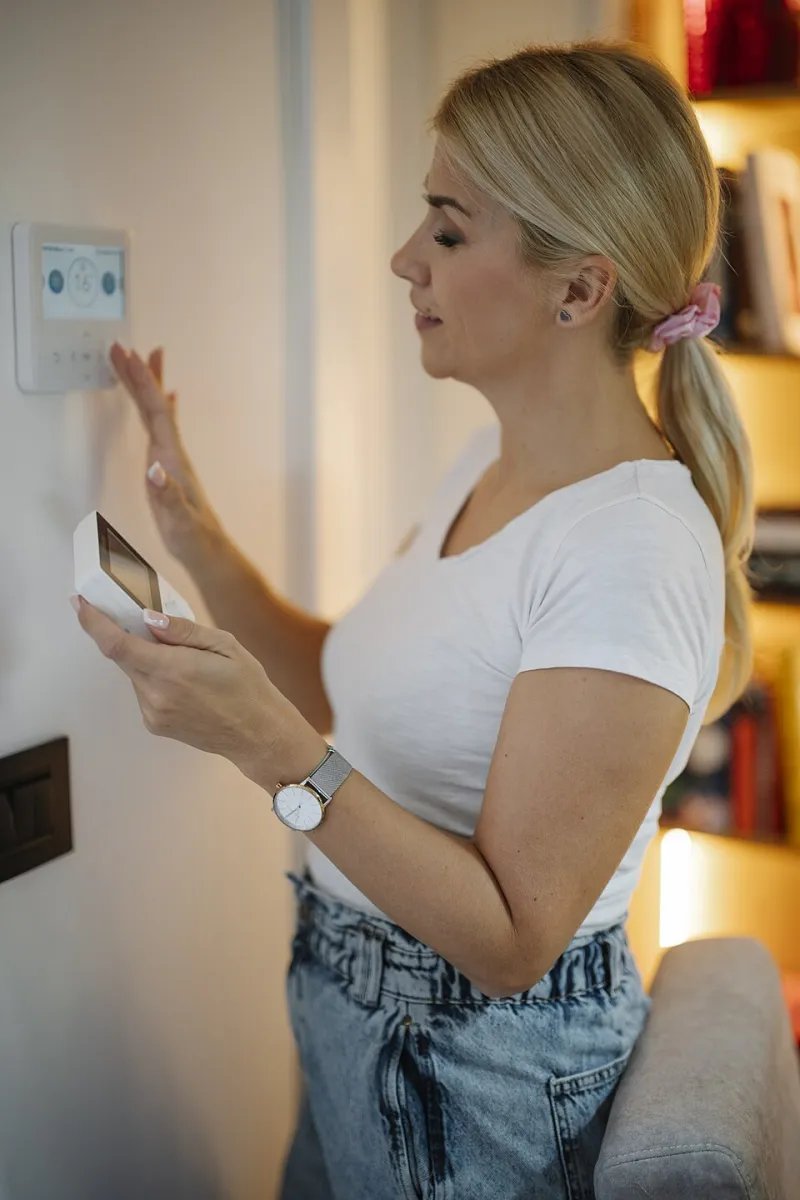
Walk into most UK homes and the thermostat is exactly where the builder left it: on a hallway wall, roughly 1.5 metres up, between the front door and the foot of the stairs. It is a convenient position. It is rarely a representative one. In smart heating systems, where a single sensor can drive the boiler for hours at a time, the difference between convenient and representative is worth more than any gadget on the market.
What the hallway actually measures
A hallway is a corridor of moving air, not a room. Three forces act on it constantly, and all three push its temperature away from the rest of the house.
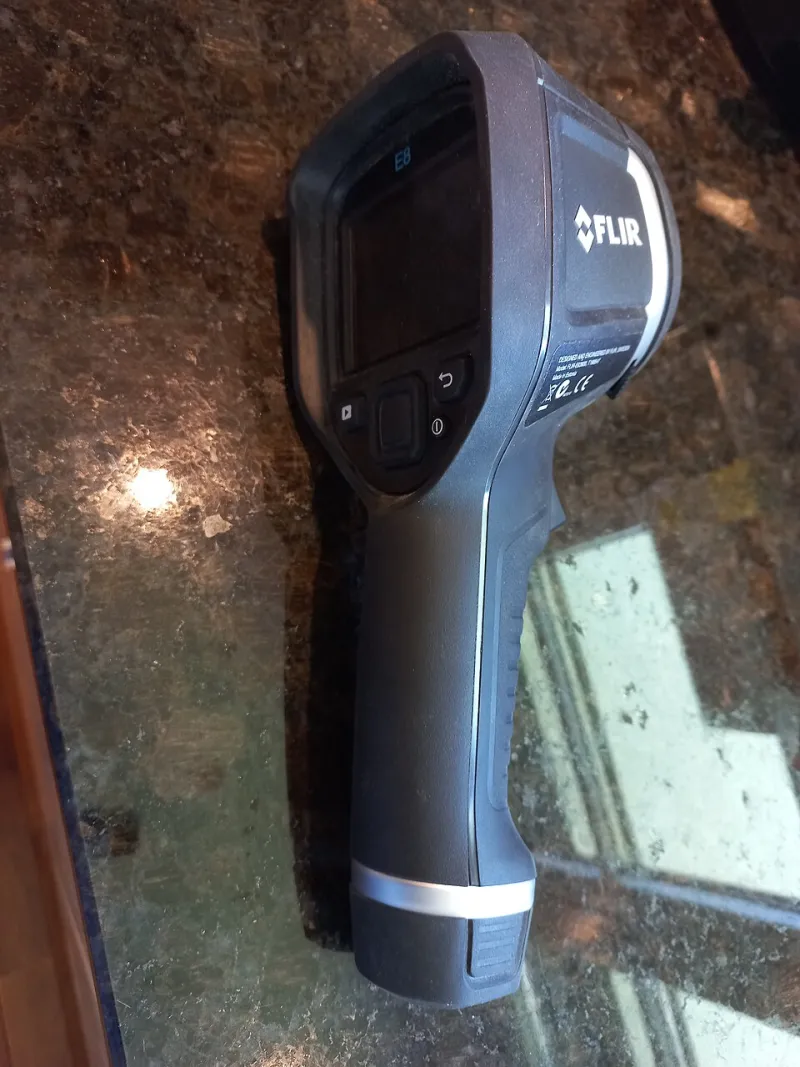
Door cycles. Every opening of the front door exchanges a volume of warm internal air for cold external air. In November, with an 8°C outside and a 20°C inside, that exchange is substantial. A thermal camera placed at the threshold shows a plume of cold air sliding along the floor and pooling at the base of the stairs — precisely where many hallway sensors sit on the wall above.
Draughts. Letterboxes, cat flaps, keyholes and imperfect door seals all leak. So do suspended timber floors in Victorian and Edwardian terraces, where a hallway floorboard gap can pull cold air in from the subfloor void. A sensor near such a gap reads low, and the boiler over-fires to compensate for a chill that no occupied room is experiencing.
Stratification. Hallways are often tall, open to a landing, or open to a stairwell. Warm air rises and collects at the top; the sensor sits in the cooler mid-band. The gap between the reading at 1.5 metres and the reading at head height on the landing above can easily be 1.5°C to 2.5°C.
The thermal evidence
A thermal survey of a typical interwar semi-detached house, carried out on a still, 7°C morning, illustrates the pattern. With the heating running and the hallway setpoint at 20°C, the camera showed:
- The hallway wall beside the sensor reading 19.6°C.
- The living-room wall at the same height reading 21.1°C.
- The bedroom wall on the first floor reading 18.9°C.
- The hallway floor at the front door reading 14.2°C.
The hallway sensor was, in effect, averaging a warm wall and a cold floor and reporting a number that described neither. The living room — where the occupants actually spent the evening — was warmer than the system believed. The bedroom was cooler. The boiler was being asked to solve the wrong equation.
This is not a fault of the sensor. It is a fault of placement. A sensor is a witness, and a witness in the wrong room gives honest testimony about the wrong events.
The relocation test
Before moving anything permanently, run a controlled comparison. The method is straightforward and costs nothing beyond a portable sensor.
- Log the status quo. Leave the existing hallway sensor in place for seven days. Record the setpoint, the actual hallway temperature and the boiler run-time per day (most smart systems export this).
- Place a portable sensor in the living room, at seated head height, away from radiators and direct sunlight, for the same seven days.
- Compare the two traces. Look for the gap at the times that matter: early morning, evening occupancy, and the hour after the front door is used.
- Repeat in the main bedroom. Bedrooms are where the gap between perceived and actual warmth is most often felt, and where overnight set-backs are most often mistuned.
In a typical three-bedroom home running a condensing combi, this test commonly reveals a 1.5°C to 2.5°C divergence between the hallway reading and the living-room reading during occupied hours. The consequence is a boiler that runs longer than necessary in the evening and shorter than comfortable in the morning.
What changes when the sensor moves
Moving the sensor — or, in a zoned system, promoting a living-room or bedroom sensor to the controlling role — usually produces three effects.
Boiler run-time falls. The system stops chasing hallway draughts. In the test house, daily run-time dropped by roughly 11 per cent over the following fortnight, with no loss of reported comfort in the occupied rooms.
Setpoint drift disappears. The habitual adjustment of the thermostat — up a degree when the hallway feels cold, down a degree when the sun hits the hall window — becomes unnecessary. The setpoint stays where the occupants set it.
Comfort becomes consistent. The living room and bedroom hold their temperatures more closely, because the system is now regulating the rooms that are actually used.
A room-by-room placement checklist
Use this as a guide when siting a sensor or evaluating an existing one.
- Living room: the best default. Mount at seated head height (about 1.2 metres), on an internal wall, away from radiators, windows, televisions and lamps.
- Bedroom: a useful secondary sensor, but keep it clear of bedding and curtains and away from the radiator. Bedrooms often run cooler than living rooms by design; the sensor should reflect the sleeping environment, not the landing outside.
- Hallway: acceptable only if it is not the sole controlling sensor in a home with a draughty front door. If it must be used, site it away from the door, above the floor gap, and not on an external wall.
- Kitchen: generally poor. Cooking, kettles and extractor fans create large, rapid swings that are not representative of the rest of the house.
- Bathroom: unsuitable as a controlling sensor. Humidity and rapid temperature swings distort readings.
- Conservatory: avoid entirely for control purposes. Solar gain and overnight heat loss make it the least representative room in the building.
Convenient versus representative
The hallway thermostat persists because it is easy to wire, easy to reach, and easy to read on the way past. None of those are thermal arguments. A smart heating system is only as good as the signal it regulates, and a signal taken at the front door is a signal about the front door.
The practical recommendation is modest: run the relocation test, compare the traces, and if the hallway is driving decisions in rooms it cannot see, move the controlling sensor — or add one — to the room where the household actually lives. The boiler will run less. The house will feel more even. And the thermostat will stop reporting on the weather outside and start reporting on the home inside.